
DEFENSE NEWS - Major achievements of the Turkish Defense industry in 2025
DEFENSE NEWS - Major achievements of the Turkish Defense industry in 2025
Beyond the general and widely held perceptions of Türkiye’s Defense Technological and Industrial Base (DTIB)—often focused on drones and a handful of recurring defense companies—this article aims to highlight the many concrete actions carried out by Ankara in 2025 in terms of programs and equipment for the Turkish Armed Forces and the Gendarmerie.
In the land domain, 100 VURAN and KİRPİ-type vehicles, manufactured by BMC, were delivered to the Army and the Gendarmerie. Still regarding BMC, new ALTAY tanks were delivered, and a new production facility for next-generation tanks and armored vehicles was inaugurated in the Ankara Aerospace Specialized Organized Industrial Zone (Ankara Uzay ve Havacılık İhtisas Organize Sanayi Bölgesi).
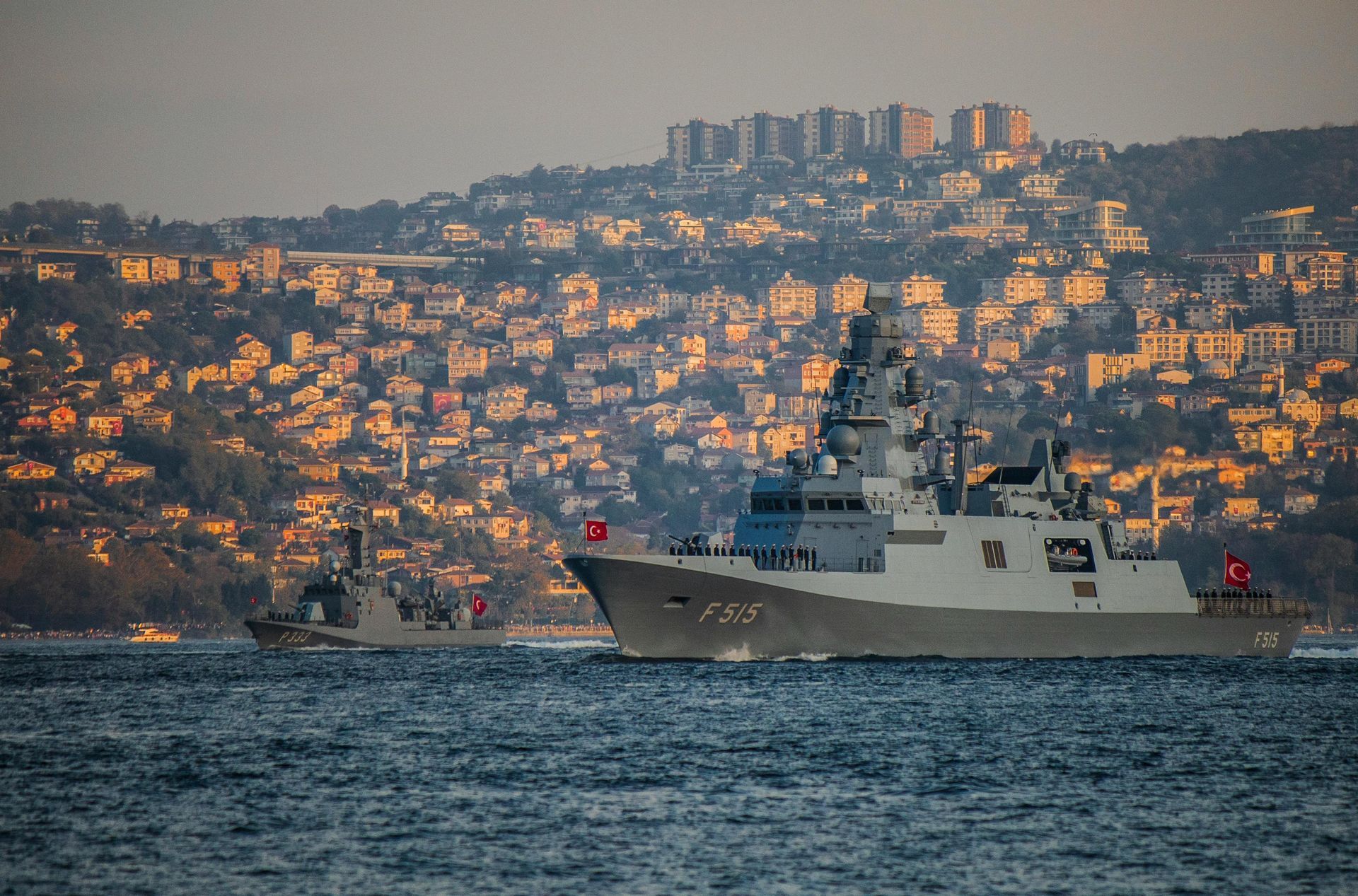
Achievements in the naval domain primarily concern the MİLGEM (national ship) program. The frigate TCG İSTANBUL (F-515), the fifth vessel in the project following the four ADA-class corvettes, conducted live-fire exercises including the HİSAR-D RF missile developed by ROKETSAN, deployed via the national vertical launch system MİDLAS (Millî Dikey Atım Lançer Sistemi). The frigate İZMİR (F-516), the sixth in the program, built by the TAIS-STM partnership in ANADOLU shipyards, was launched, along with the frigate İZMİT (F-517), seventh in the program, built by SEDEF, and the frigate TCG İÇEL (F-518), eighth in the program, built by SEFİNE.
For submarines, the third REİS-class submarine, MURATREİS (S-332), was launched at GÖLCÜK shipyards, where construction of the first test block for the national submarine program MİLDEN also began.
The national fast attack craft (Millî Hücumbot), built by STM, was laid down, while the fourth vessel of the new-generation landing craft project (Yeni Tip Çıkarma Aracı or Yeni Landing Craft Tank, YLCT) was launched.
Regarding naval armament, MKE completed its fifth delivery of national DENİZHAN 76/62 mm naval guns and tested the integration of a 127 mm/54 gun on the frigate TCG FATİH (F-242).
In the air domain, one of the most significant achievements was undoubtedly the signing, on June 11, 2025, between TUSAŞ (Turkish Aerospace Industries, TAI) and the Indonesian Ministry of Defense, of a contract for the sale of 48 units of the future Turkish combat aircraft KAAN. Another contract, worth €2.6 billion, for the sale of 30 HÜRJET jet trainers to Spain, was signed on December 30, 2025. However, both aircraft remain at the project stage, with HÜRJET being the more advanced, having completed its 300th test flight in 2025 and reaching a speed of Mach 1.2.
Still in the combat aviation sector, the EDPOD (Elektronik Destek Podu, Electronic Support Pod), developed by TÜBİTAK BİLGEM, began equipping the Turkish Air Force’s F-16 fleet.
For helicopters, a 14th ATAK helicopter developed by TUSAŞ was delivered to the Gendarmerie, along with a fourth T-70 utility helicopter (Genel Maksat Helikopteri) delivered to the Armed Forces.
The prominent role of drones in Turkish defense programs was confirmed in 2025. Thus:
- at BAYKAR:
- the now well-known BAYRAKTAR TB-2 demonstrated its autonomous spin recovery capability, while the turboprop AI-powered TB2T-AI version exceeded 37,000 feet in flight altitude;
- the BAYRAKTAR TB-3, the navalized version of the TB-2, completed its autonomous takeoff and landing tests on the aircraft carrier TCG ANADOLU. It fired the KEMANKEŞ smart mini cruise missile as well as two MAM-T (Mini Akıllı Mühimmat) bombs developed by ROKETSAN. Both bombs were guided to the same target using the ASELFLIR-500 electro-optical system developed by ASELSAN;
- the heavy attack drone AKINCI conducted its first flight with the MURAD AESA radar (Active Electronically Scanned Array) developed by ASELSAN and fired a ÇAKIR cruise missile developed by ROKETSAN using its low-altitude autonomous target identification system. The Gendarmerie is set to receive its first AKINCI drone following completion of the acceptance process;
- the KIZILELMA jet-powered drone completed its firing tests of the GÖKDOĞAN air-to-air missile using the MURAD AESA radar while flying in formation with two F-16s. Two KIZILELMA drones also demonstrated autonomous close-formation flight capability;
- at TUSAŞ/TAI:
- the ANKA III drone conducted a firing of the TOLUN guided munition developed by ASELSAN at an altitude of 20,000 feet and a speed of 180 knots. It also fired the LGK-82 (Lazer Güdüm Kiti, Laser Guidance Kit), also developed by ASELSAN;
- the AKSUNGUR drone reached an altitude of 40,000 feet using the national PD170 engine developed by TEI (TUSAŞ Engines Industries) and a national thermal battery developed by ASPİLSAN;
- the high-speed turboprop target drone ŞİMŞEK K conducted its first flight using the RATO (Rocket-Assisted Take-Off) system;
- regarding other drone manufacturers:
- the KARGU drone from STM, equipped with a penetrating warhead, was exported for the first time. Its FPV (First Person View) version, named KARGUFPV, conducted its first firing;
- the ÇAKIR cruise missile developed by ROKETSAN was integrated onto the armed naval drone MARLİN, co-developed by ASELSAN and SEFİNE;
- HAVELSAN signed its first agreement with DESAN for the use of vertical takeoff and landing drones on naval platforms;
- the SANCAR armed naval drone developed by HAVELSAN entered service.
In the space sector, the first national communications satellite, TÜRKSAT 6A, now operational, conducted its first transmission test and completed its in-orbit testing process at 42° East longitude. The FGN-TUG-S01 by FERGANİ, Türkiye’s first hybrid-engine orbital transfer vehicle, began its space journey, along with the FGN-100-d2 satellite from the same manufacturer. Meanwhile, ASELSAN’s LUNA-1 low Earth orbit IoT (Internet of Things) satellite was launched aboard a SpaceX Falcon-9 rocket, with telemetry signals received by a ground station in Ankara.
In the field of information and communication systems, the Air Force Information System (Hava Kuvvetleri Bilgi Sistemi, HvBS), developed by HAVELSAN, completed four out of six stages of NATO’s strategic and operational-level technical analysis process.
In the missile sector, the delivery and inauguration of facilities for the Steel Dome at ASELSAN GÖLBAŞI, as well as the groundbreaking ceremony for the Oğulbey site, took place in the presence of the President of the Republic of Türkiye, Mr. Recep Tayyip ERDOĞAN. Components of the Steel Dome include:
- the SİPER 1 air and missile defense system, deployed from an autonomous battery; its naval version, SİPER 1-D, was launched via a MİDLAS system;
- the LEVENT short-range air defense system developed by ROKETSAN conducted its guided firing test in the Black Sea;
- the GÖKSUR IIR infrared air defense system conducted its first low-altitude sea-based firing from the GÖKSUR 100-N vertical launch system.
As part of the GÖKTAN ground-based launch and fire control system project, the TOLUN missile, launched via a DELTAV rocket, successfully hit its ground target after deploying its fins.
The TAYFUN ballistic missile developed by ROKETSAN conducted its third test firing with a warhead.
Regarding cruise missiles, the SOM-J developed by TÜBİTAK SAGE conducted its first test firing against a maritime platform. The Kara ATMACA (land-based version) developed by ROKETSAN improved its range and flight duration performance, while its encapsulated naval version was launched for the first time from underwater during the DENİZKURDU-II 2025 exercise.
The mobile laser weapon system GÖKBERK completed its destruction tests, while the high-power laser weapon system IŞIK, developed by TÜBİTAK SAGE, completed its acceptance trials.
Finally, KALE Jet Engines signed Türkiye’s first export contract for a missile engine, the KTJ-3200.
To complete this performance overview, it is worth noting that in 2025, five Turkish defense companies were ranked in the Top 100 (ASELSAN 43rd, TUSAŞ/TAI 47th, ROKETSAN 71st, ASFAT 78th, and MKE 80th), a new milestone was reached in defense exports with $10.054 billion, and a record attendance was achieved at the 17th edition of the IDEF exhibition with over 120,000 visitors and 270 contract signing ceremonies, 65% of which were for export.
***
Article written by Patrice MOYEUVRE, General Officer in 2s of the French Air and Space Force, researcher at IRIS and Director of defense and security projects within Advantis.