
Great Rich Technology to build its first production facility outside China in Türkiye
Great Rich Technology to build its first production facility outside China in Türkiye
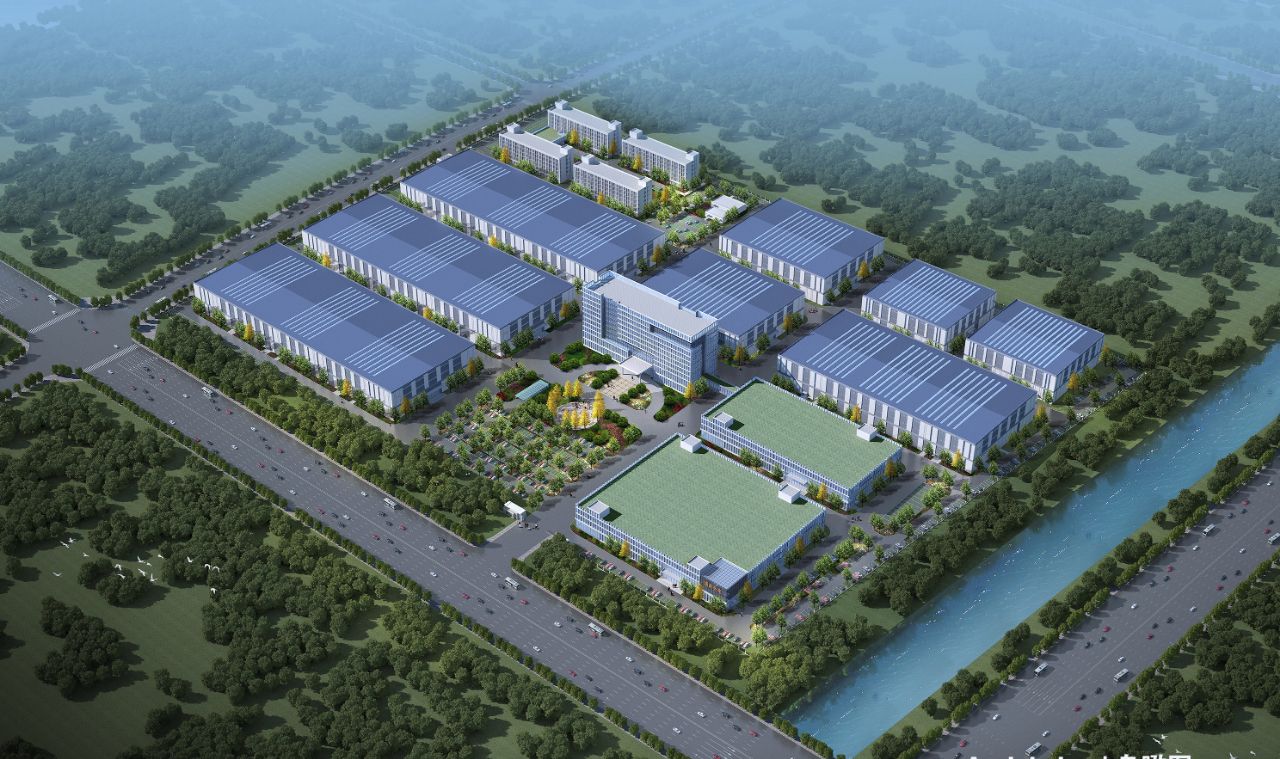
New loan to allow Chinese Great Rich Technology to build its 1st overseas green manufacturing facility in northwestern Turkish province of Kirklareli.
The Asian Infrastructure Investment Bank (AIIB) is providing up to $75 million in financing to establish an advanced green manufacturing facility in northwestern Türkiye.
The AIIB made another investment as part of ongoing efforts to develop Türkiye’s advanced technology and green manufacturing capacity.
The advanced plant to be built in the northwestern province of Kirklareli will be established by Chinese manufacturer Great Rich Technology, marking the firm’s first production base outside China.
The facility will be co-financed by the World Bank Group’s International Finance Corporation, and it will produce energy-efficient window films, paint protection films, and specialized materials to absorb carbon dioxide and volatile organic compounds.
The investment aims to reduce industrial emissions, expand the availability of low-emission advanced materials in emerging markets, and help solidify Türkiye’s position as a manufacturing hub bridging Europe, Asia and other neighboring markets.
Turkey, the second-largest recipient of AIIB investments
Ajay Bushan Pandey, vice president of the AIIB, told Anadolu that the bank made its second-largest investment among all its members in Türkiye over the past decade.
“$9 billion and about 40 projects we have invested in, and then there are many more projects in the pipeline,” he said. “We have our second-largest investment in Türkiye, (and) the only country that is first is India, (…) but if you look at it per capita wise, I think Türkiye will be the highest.”
Pandey stated that investments in Türkiye are carried out via public- and private-sector entities and local financial institutions, with the AIIB having a wide range of established partnerships with other development banks in the country.
He noted that Türkiye remains committed to contributing to infrastructure development in the public and private sectors, as there is massive potential to implement more projects and secure additional financing, while the bank provides funding for projects directly or organizes financing through collaboration with development banks or financial institutions within the country.
Energy and the ecological transition at the heart of the portfolio
Pandey stated that the AIIB’s current portfolio is more concentrated in energy, transportation, waste management, urban development, and climate resilience, while the bank has also approved a geothermal project for Türkiye.
“If you look at COP31 (or the UN Climate Change Conference), these are the themes: sustainable cities, electrification, and zero waste — all those are already in our portfolio and these are the portfolios where we would like to do more,” he said.
He noted that energy security has become a key area in the current geopolitical situation, with “every country looking for energy security.”
“And if you are talking about energy security, then renewable energy and electrification are a very, very integral part of your energy security policy, and this is precisely what Türkiye is currently focusing on,” he said.
No maximum investment target for Türkiye
Pandey stated that the bank aims to boost its portfolio in Türkiye, as “there is no limitation or target” when it comes to implementing projects in the country.
“If we are able to identify good projects along with the Turkish government, we can finance them; therefore, we do not have any such target or limitation — let’s say if we are able to identify 10 projects, we will try to finance all 10 over the next few years,” he said.
He noted that seeking solutions to climate issues is key to developing infrastructure.
“We have seen that there is a huge gap between what Asian infrastructure will require over the next few years and how much money is available, that is why the role of MDBs (multilateral development banks) can become very important,” he said.
“Because MDBs can actually help address the gap through their own balance sheet, or they can mobilize enough private capital through financial instruments to bridge that gap — MDBs can also actually help in identifying projects, structuring the projects, and making them bankable so that they are able to get financed from various sources. The MDBs, or private capital can flow in, or instruments like guarantees and credit enhancements,” he added.
***
Source : Anadolu Agency, September 08, 2026.