Türkiye : a $10 billion petrochemical complex project is taking shape
Türkiye : a $10 billion petrochemical complex project is taking shape
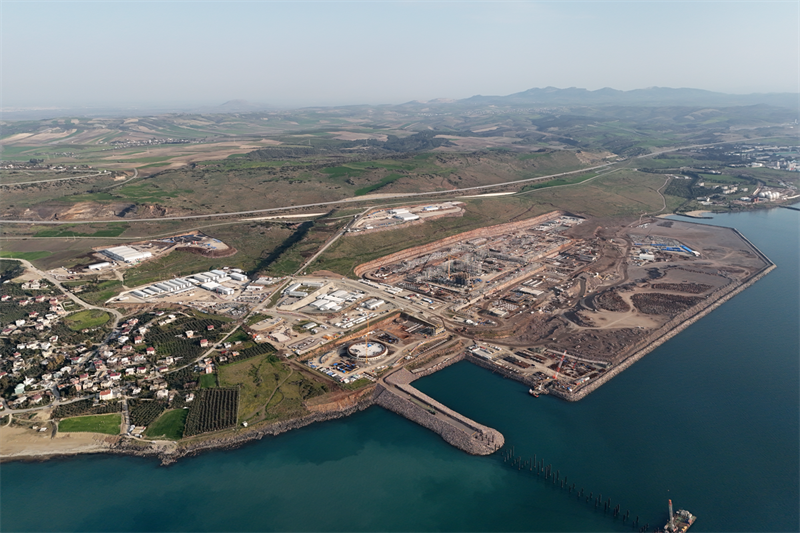
Türkiye’s future petrochemical complex will be developed by TVF Rafineri ve Petrokimya AŞ. In a context marked by geopolitical tensions—particularly the airstrikes launched on February 28 by the US–Israel alliance against Iran—energy markets remain under pressure. Oil prices surged to as high as $120 per barrel before stabilizing at around $112 at the time of writing.
For the Turkish economy, the impact goes far beyond rising fuel prices. Disruptions to oil supply from Gulf countries are also driving significant volatility in downstream products, especially petrochemicals.
This issue is not new. As highlighted in our previous analysis, Türkiye’s domestic petrochemical production—critical to many industrial sectors—faces structural weaknesses. The conclusion was clear: Türkiye has fallen behind and now needs a bold, structured response, similar to the TOGG model in the automotive sector.
A critical level of dependency
The outbreak of the conflict, just one day after that analysis, has underscored the vital importance of strong local production capacity. Many industries—starting with plastics—highly dependent on petrochemical inputs, are now facing serious supply challenges.
Manufacturers are dealing with shortages, a growing reliance on the black market, and price increases ranging from 35% to 50% in USD over the past month.
Public debate, however, continues to focus largely on Petkim, often criticized for insufficient investment since its privatization. This perspective is considered overly simplistic. Even if operating at full capacity, the Aliağa complex—with its 14 plants and 7 auxiliary units—would still fall short of current demand. Its production scale is now seen as limited and costly by global standards.
As a result, Türkiye imports more than $15 billion worth of petrochemical products annually, making it the world’s second-largest importer after China. Given the gap in industrial scale, this effectively highlights the depth of Türkiye’s dependency.
The sovereign wealth fund takes the lead
In response, the Türkiye Wealth Fund (TVF) is emerging as the key player to drive a large-scale industrial solution.
As of the end of 2025, TVF holds 34 companies across 7 sectors, along with 2 licenses and 46 real estate assets. Since its inception, it has carried out nearly $18 billion in investments, bringing its total assets to $360 billion. It now ranks among the world’s top 10 sovereign wealth funds.
Within this framework, the petrochemical complex project—initially announced in 2019 but left dormant—has regained momentum.
According to available information, the planned site is located in Ceyhan (Adana), on land owned by BOTAŞ, near an officially designated Energy Specialized Zone. The project, with an estimated investment of at least $10 billion, aims to produce domestically the main petrochemical products consumed in Türkiye, including polyethylene (LDPE/HDPE), polypropylene, PVC, VCM, and purified terephthalic acid (PTA).
A partnership-driven model
The project, for which the Environmental Impact Assessment (EIA) has been completed, will be carried out by TVF Rafineri ve Petrokimya Sanayi ve Ticaret A.Ş., a newly established entity. It is expected to be structured around a partnership model allowing risk-sharing, with participation from major domestic and international industrial players.
Beyond the investment itself, the initiative sends a clear message to the private sector: encouraging companies to become producers of the raw materials they consume.
A decisive question: the production model
One key issue remains unresolved: the choice of feedstock.
Currently, Petkim relies on naphtha, a costly option that limits competitiveness. In many hydrocarbon-rich countries, particularly in the Middle East, this model has largely been phased out in favor of natural gas-based production.
The technological choice for this new complex will therefore be critical to ensuring its long-term economic viability.
A strategic sector for the future
The development of petrochemicals goes far beyond industrial policy. It is a strategic sector that supplies essential inputs to a wide range of industries, from plastics and textiles to automotive manufacturing.
While the project raises significant expectations, its timeline remains long. Given its capital and technology intensity, full completion could take up to eight years, even under optimistic assumptions.
In the short term, no significant relief is expected for manufacturers, who will continue to face ongoing supply constraints.
***
Source : Ekonomi Gazetesi, April 1st 2026. Article translated by Advantis Conseils Turquie.