
Türkiye, officially included in the "Made in EU" strategy
Türkiye, officially included in the "Made in EU" strategy
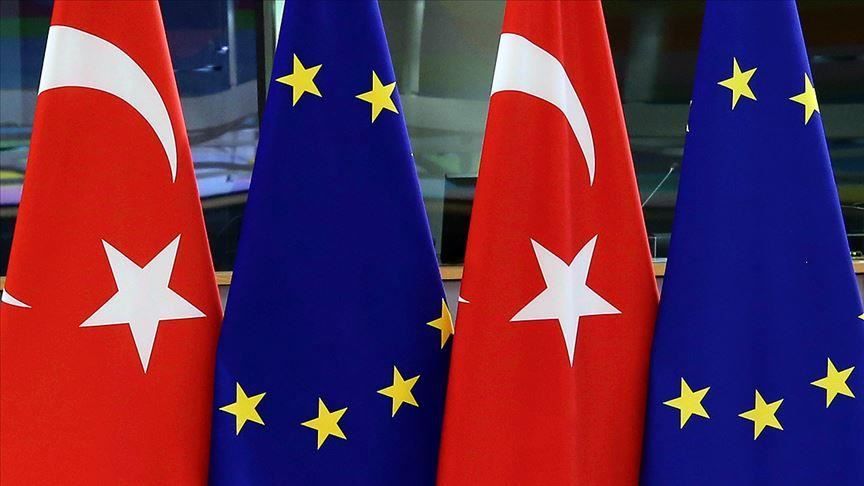
Türkiye has welcomed the announcement of the long-awaited industrial policy of the European Union aimed at strengthening its capabilities in strategic sectors. The initiative also allows Ankara’s inclusion due to its customs union with the EU, a decision described as “positive and constructive.”
Trade Minister Ömer Bolat said on Wednesday that the legal confirmation of Türkiye’s inclusion in the “Made in EU” policy represents “an important step for trade relations.”
Earlier in the day, the European Commission unveiled a legislative proposal designed to strengthen Europe’s industrial base by introducing “Made in EU” and low-carbon requirements for strategic sectors.
A new industrial policy to strengthen Europe’s competitiveness
The measure, also known as the Industrial Accelerator Act (IAA), targets several key industries including steel, cement, aluminum, automobiles and net-zero technologies. The proposal also allows for the possible expansion of these rules to other energy-intensive sectors such as chemicals.
The new rules aim to reinforce European industries against intense competition from China. The initiative had been delayed for several months due to disagreements over the scope and details of measures that some observers viewed as protectionist.
Regarding strategic sectors such as automobiles, green technologies and steel, the proposal forms a key part of the European Union’s strategy to regain competitiveness, reduce dependencies and prevent job losses.
The European Commission also stated that the legislative package aims to increase manufacturing’s share of the EU’s gross domestic product (GDP) to 20% by 2035, compared with around 14% in 2024.
A coctrinal shift in the definition of “Made in Europe”
The draft regulation states that countries with an agreement creating a free-trade area or customs union with the EU would be considered “local.” This includes countries in the European Economic Area (EEA), such as Norway and Iceland, as well as Türkiye, which has had a customs union with the EU since the 1990s.
“It is a change in doctrine — one that was unthinkable just a few months ago,” said EU Industry Commissioner Stéphane Séjourné during a press conference.
More broadly, the rules aim to ensure that public and foreign investments support manufacturing within the EU’s 27 member states. Companies seeking public funding will therefore have to meet minimum thresholds of EU-made components. Large investments from dominant foreign companies could also be subject to certain conditions, including the employment of European workers.
A political compromise after months of debate
Initially expected last year, the measures — strongly supported by France — were postponed several times due to disagreements among EU member states. Some argued that they ran counter to the European Union’s traditional pro-free-trade stance.
Much of the debate focused on the geographical scope of the “Made in Europe” concept.
Skeptics, including the EU’s largest economy, Germany, advocated for a more inclusive approach under the concept of “Made with Europe,” which would incorporate the bloc’s trading partners.
Brussels ultimately settled on a compromise based on the principle of reciprocity: countries that have agreements with the EU allowing European companies to access public funding on the same terms as local firms may be included in the framework.
An “important step” for trade relations between Türkiye and the EU
On social media, Trade Minister Ömer Bolat emphasized that the recognition of the existing customs union within the framework of the new industrial policy represents a constructive decision for maintaining investments and strengthening the competitiveness of European value chains.
“We are pleased that the intensive and constructive diplomatic engagements we have recently conducted with the European Union, based on mutual understanding in economic and trade matters, have yielded positive results,” he wrote on X.
According to him, consultations with the EU confirmed the legal basis allowing the “EU origin” requirement in the draft regulation to include Türkiye in principle within the framework of the customs union, representing “an important step for our trade relations.”
Türkiye and the European Union maintain major economic relations, with bilateral trade exceeding $200 billion annually.
A strategic issue for Türkiye’s automotive industry
Türkiye’s inclusion in the initiative is particularly significant given the strength of its automotive industry.
In recent years, the country has exceeded $40 billion in automotive exports, a large share of which is directed to European markets such as Germany, France, Italy and Romania.
Minister Ömer Bolat stressed that Türkiye is a reliable and indispensable part of European value chains in many critical sectors, particularly the automotive industry.
“This development is expected to further deepen sectoral integration between Türkiye and the EU while accelerating the green and digital transformation of our value chains,” he added.
The president of the Union of Chambers and Commodity Exchanges of Türkiye (TOBB), Rifat Hisarcıklıoğlu, also welcomed the development.
“The goal is to further strengthen Türkiye’s position within the European industrial ecosystem and advance economic integration with the EU, including the modernization of the customs union,” he said.
“Made in Europe” requirements for strategic sectors
The “Made in Europe” requirements, which also aim to accelerate industrial decarbonization, will apply to several strategic sectors: steel, cement, aluminum, automobiles and net-zero technologies.
Governments financing infrastructure projects will notably have to ensure that a minimum share of low-carbon European steel, cement and aluminum is included.
In the automotive sector, electric-vehicle manufacturers will have to ensure that at least 70% of their cars’ components are produced within the EU in order to access public funding.
Similar rules are expected to apply to batteries, solar, wind and nuclear energy.
Conditions for foreign investments
The legislative proposal also aims to encourage foreign companies to partner with European firms when establishing operations in the EU.
To achieve this, the text introduces conditions for foreign investments exceeding €100 million in “emerging strategic sectors,” such as batteries and electric vehicles.
***
Source : Daily Sabah, March 5, 2026.