
Article Advantis - Le Moci : Türkiye, decoding the market
Türkiye : decoding a market at the crossroads of the worlds with high strategic value ... Between myths and realities
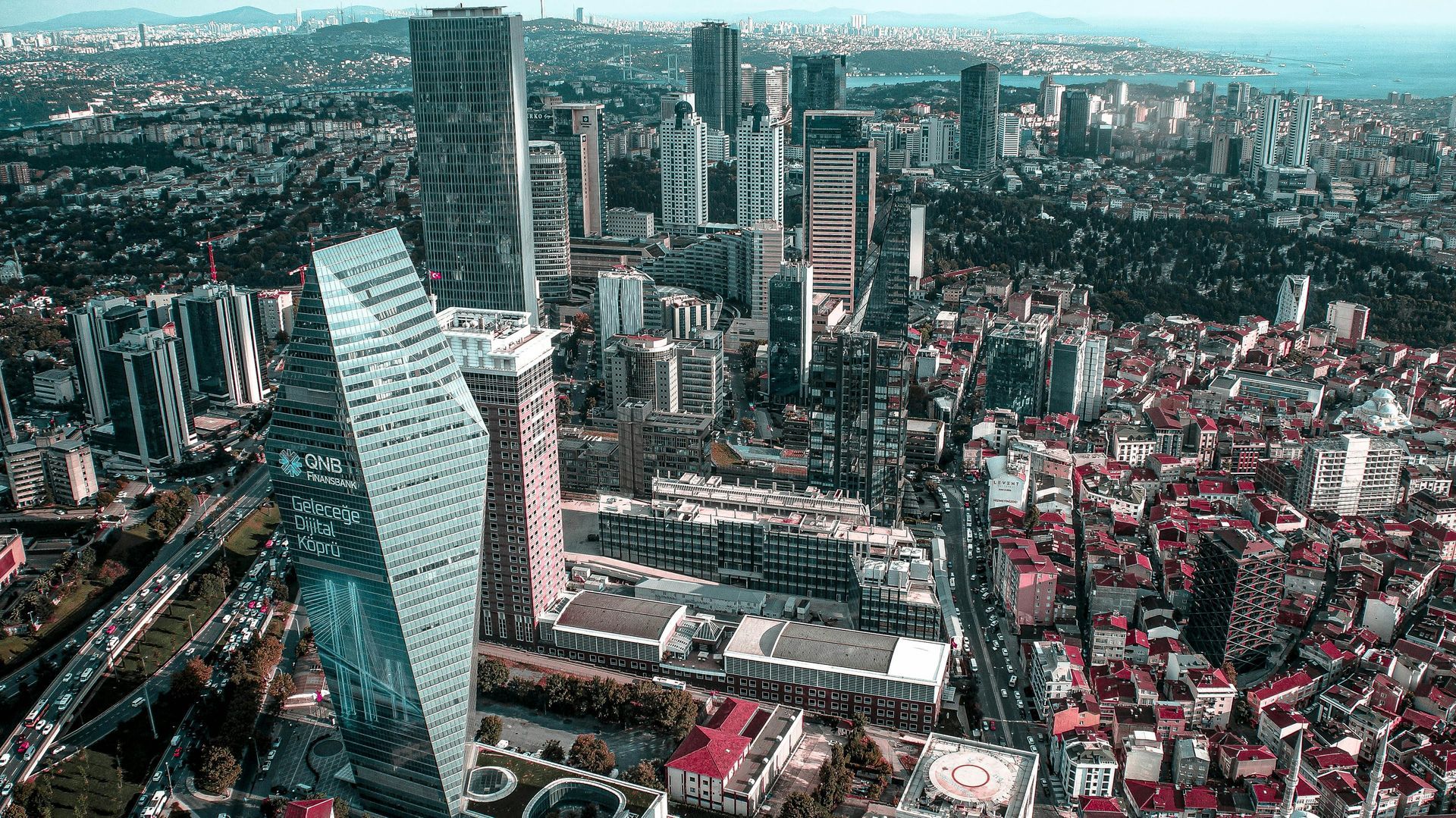
Türkiye holds a singular position in the international economic landscape. At the crossroads of East and West, often approached through reductive lenses or persistent preconceived ideas, it nevertheless remains a key market for many industrial and economic players. Behind the myths lies a more complex reality, shaped by both concrete opportunities and local dynamics that must be carefully analyzed with method and insight.
Understanding Türkiye means going beyond appearances. It requires grasping a demanding market where human relationships, trust, and strong local anchoring largely determine the success of projects. It also means recognizing that complexity, when properly managed, can become a genuine driver of value creation and a lasting strategic advantage.
Understanding Türkiye beyond common misconceptions
Türkiye, a mature industrial power at the heart of European value chains
Türkiye has entered a new phase of economic maturity. Long perceived as a volatile emerging market or as a low-cost subcontracting country, it now stands out as a regional industrial power, a Eurasian commercial hub and a strategic player in international value chains.
Certainly, the country has experienced – and continues to experience – inflationary pressures, monetary adjustments and regional geopolitical shocks. However, this apparent volatility conceals strong structural fundamentals:
- A deeply diversified economy,
- A robust industrial base,
- A strong capacity for adaptation and resilience,
- As well as a clear political commitment to industrial and technological sovereignty.
Contrary to common misconceptions, Turkish competitiveness no longer relies solely on costs or on a few traditional sectors. The country has profoundly transformed its productive system and is no longer limited to execution. It now designs, develops and manufactures technologies in high value-added sectors such as automotive, aerospace, industrial machinery, electronics, energy and process industries. This rise in capability paves the way for industrial partnerships based on the sharing of know-how, skills and technologies, beyond the simple logic of subcontracting.
With its domestic market of more than 87 million inhabitants and its strategic geographic positioning, Türkiye represents a leading industrial and commercial platform, offering a natural gateway to the Balkans, the Caucasus, Central Asia and the Middle East.
Türkiye is now at the heart of partial relocation (nearshoring) strategies, supply chain security initiatives and efforts to reduce dependence on Asia, particularly for Europe.
For French companies, the potential is real. However, access to the Turkish market depends less on the sole quality of the offer than on the ability to integrate sustainably into local business practices, to maintain an on-the-ground presence and to build long-term trust-based relationships. Türkiye is a demanding market, but a transparent one for companies that adopt a structured and long-term approach.
Türkiye's general macroeconomic context
Türkiye is currently the 17th largest economy in the world, with a nominal GDP estimated at approximately USD 1.32 trillion in 2024 and expected to reach ≈USD 1.57 trillion in 2025 according to IMF projections. GDP per capita stands at around USD 15,500 in 2024, with an estimate of approximately ≈USD 18,200 in 2025. These figures reflect a significant year-on-year progression.
Economic growth continued in 2024 despite a constrained financial environment, with GDP growth of +3.2% (above expectations); growth in 2025 is estimated at around 4%, reflecting a positive but more moderate dynamic compared to that observed in 2023 (+5.1%).
The Turkish population is estimated at more than 87.8 million inhabitants in 2025 and remains characterized by a relatively young demographic structure – median age around 34–35 years – which continues to be a structural driver of market dynamism.
The price environment remains marked by high inflation but is now part of a trajectory of gradual disinflation. After reaching a peak of 72.3% in 2022, annual inflation declined to 53.9% in 2023, before temporarily rising again in 2024 (58.5%), notably due to the sharp depreciation of the Turkish lira and imported inflation. However, since 2023–2024, the Central Bank of Türkiye has implemented significant monetary tightening, marking a shift in favor of macroeconomic stability. This strategy is beginning to yield results: in 2025, inflationary momentum has slowed markedly, with average annual inflation estimated at approximately 34.9%.
High potential sectors and growth drivers
Beyond traditional opportunities
Before addressing high-potential sectors in Türkiye, it is strategic to place this analysis within the framework of the country’s Vision 2053. This vision constitutes the long-term roadmap defined by the Turkish authorities to support Türkiye’s economic, industrial and technological transformation by 2053.
As an extension of Vision 2023, Vision 2053 aims to shift the economic model toward greater value added, innovation and international competitiveness, while strengthening the country’s industrial and technological sovereignty.
Focused on structural transformation, innovation and moving up the value chain of the productive system, this vision creates a strategic foundation from which high-opportunity sectors emerge, expected to become Türkiye’s main growth drivers in the decades to come.
Agriculture, livestock and agro-industry : towards accelerating modernization
A sector representing around 9.6% of GDP, the country remains among the world’s top 10 agricultural producers and retains a dominant position in Europe for volumes of fresh fruit and vegetables. It is a very powerful export sector, supported by a strong agricultural production base:
- Europe’s 1st agricultural producer, 7th worldwide
- 24 million hectares of agricultural land, i.e., 30% of the country’s surface area
- On the global podium for numerous horticultural productions: hazelnuts, figs, quinces, raisins, tomatoes, watermelons, cucumbers, chickpeas, …
- 2nd European country and 4th worldwide in terms of greenhouse production
- Europe’s 1st tractor producer
Livestock benefits from a very large sheep, goat and cattle herd, supporting a dairy sector and a highly developed leather industry. This makes Türkiye:
- Europe’s 1st ruminant herd across all species combined
- Europe’s 2nd poultry producer and 9th worldwide
- Europe’s 3rd milk producer and 9th worldwide
- Europe’s 1st aquaculture producer
Türkiye therefore remains one of the world’s agricultural giants, but the challenge is no longer quantity: it is productivity, traceability, food safety, automation and moving upmarket.
Needs are exploding in:
- Automation and modernization
- Smart agricultural equipment,
- Precision irrigation,
- Storage, processing and cold-chain technologies,
- Animal nutrition, genetics, animal welfare,
- Digital agricultural solutions.
For French companies recognized for their agr0-industrial know-how, Türkiye is a natural market for regional deployment.
Heealth, medical devices and biotech
Recognized for its modern hospital infrastructure, the country has risen among the world’s leading destinations for medical tourism (2 million welcomed in 2024) and offers considerable opportunities for health products, services and equipment, notably in biotechnologies and digital health.
- 7th European pharmaceutical market with an estimated size of USD 11 billion in 2024.
- 8th European market for medical devices.
- 80% of medical equipment is imported (25% from Europe).
Türkiye is building giant hospital complexes, also called “city-hospitals” to meet local and international demand for healthcare services. 25 of these facilities are currently operational and 7 are under construction. The goal is to add 41,000 additional beds.
The market records average annual growth of 8 to 10% driven by:
- Medical imaging,
- Operating room equipment,
- Implantable devices,
- Diagnostics and patient monitoring,
- Digital health and telemedicine.
A regulatory framework aligned with Europe: Turkish regulation is largely harmonized with the EU (MDR / IVDR), facilitating market access for European manufacturers. Türkiye thus serves as a structured gateway to the Middle East, Central Asia and North Africa markets.
Healthcare represents a priority, resilient and long-term market for French companies positioned in medical devices, hospital equipment, health technologies and digital solutions.
Industry, mechanics, process, automation
Türkiye is no longer only an assembly country: it has become a full industrial center, integrating:
- Design,
- Engineering,
- Prototyping,
- Production,
- Export
Needs are very strong in:
- Special-purpose machinery,
- Industrial automation,
- Robotics,
- Energy efficiency,
- Advanced maintenance and industrial services.
Industrial value added represents around 26.6% of GDP, with major structural importance for Turkish economic activity. The manufacturing sector is driven by key segments such as automotive, capital goods, metallurgy and industrial electronics.
Automotive, mobility and new value chains
Historically the country’s leading export sector (75% of production exported), the automotive ecosystem is highly developed and the main equipment manufacturers, subcontractors and international suppliers are present in Türkiye. The country hosts more than 480 tier-one suppliers and 159 R&D centers related to the sector.
- 4th European manufacturer and 12th worldwide with 1.5 million vehicles produced in 2025,
- USD 41.5 billion in exports in 2025, i.e., 17.5% of the country’s total exports,
- Europe’s 1st producer of commercial vehicles.
Thanks to technology transfer and skills upgrading, Türkiye has fulfilled a 60-year-old ambition: the design and development of its own automotive brand (TOGG), whose first model, the 100% electric T10X, began commercialization in March 2023. The second model (T10F) was launched last September.
Thus, with the development of the national electric vehicle, the country is opening up to a new segment of industrial value:
- Batteries,
- Electronic modules,
- Embedded software,
- Smart charging stations.
Renewable energy, green transition and circular economy
With the exception of coal, Türkiye is dependent on fossil energies. These fuels are imported at a rate of 83%. With a strong desire for independence, the Turkish energy market is full of opportunities, ranging from nuclear projects to the discovery of gas fields, to the rise of renewable energies.
Installed capacities and electricity mix
Türkiye currently has a cumulative installed capacity of more than 120 GW, of which nearly 60% comes from renewable sources (hydropower, solar, wind, geothermal), a share continuously increasing thanks to public and private investment.
In the recent breakdown of electricity capacity:
- Hydropower represents around 26–27% of the total,
- Solar photovoltaic around 19–20%,
- Wind around 11–12%.
These figures reflect a diversified energy mix in which renewables play a strategic role, even if their share of actual production is influenced by intermittency and hydrological conditions.
Hydropower: a robust foundation and regional leadership
Hydropower, historically the main renewable contributor in Türkiye, still represents a major share of installed capacity, with more than 32 GW.
This segment provides Türkiye with structural stability in the energy mix and a comparative advantage versus many European markets where hydropower is less developed or depends on less favorable geographic conditions.
Solar: rapid growth and a major national objective
With annual sunshine duration of around 2,700 hours/year (≈7–8 hours/day), Türkiye ranks in the top 5 sunniest countries in Europe, just behind Spain and Portugal, and well above the European average of around 1,700–1,900 hours per year.
Solar photovoltaics is therefore growing very rapidly, with solar generation increasing significantly in 2024 (+39% of solar electricity produced compared to 2023), corresponding to a jump of several terawatt-hours.
Türkiye aims to raise its solar capacity to more than 50–55 GW by 2035, as part of its carbon neutrality roadmap, implying accelerated deployment of PV projects, notably at large scale.
Wind: significant progress and future potential
Wind energy is now a structuring segment of the Turkish mix, with more than 13 GW of installed capacity estimated in 2025 and projections bringing the total to nearly 30 GW by 2035, including potentially 5 GW offshore.
This development takes place in a context of high geographic potential, notably along the Aegean and Marmara coasts. Globally, while countries such as China and major European markets multiply installations, Türkiye benefits from an offshore wind potential estimated at more than 75 GW, representing substantial growth upside.
Geothermal: a structural asset and a leading position in Europe
Geothermal energy is a specific and strategic pillar of Türkiye’s renewable energy mix. Thanks to particularly favorable geology, Türkiye has established itself as Europe’s 1st geothermal producer and one of the global leaders, with installed electric capacity exceeding 1.7 GW in 2025. The country is indeed 4th worldwide in geothermal energy production capacity.
Beyond power generation, geothermal also plays a key role in district heating, greenhouse agriculture and industrial uses, strengthening its cross-sector economic impact. Turkish authorities aim to raise geothermal capacity to 3–4 GW in the medium to long term.
Targets by 2035
Türkiye has set ambitious objectives with the overall ambition of reaching 120 GW of combined renewable capacity (including solar, wind and others) by 2035, reflecting a strong desire to strengthen energy independence and contribute to its climate commitments.
This positioning gives Türkiye a favorable investment dynamic for French companies:
- A fast-growing domestic market,
- Long-term structuring targets,
- Regular tenders for large renewable projects,
- And potential industrial and technological cooperation in solar, wind and hydropower infrastructure segments.
Offshore oil & gas drilling: objectives and key data
Türkiye is intensifying its offshore exploration efforts in the Black Sea and the Eastern Mediterranean to reduce its energy import dependence. The Sakarya field in the Black Sea, one of the largest, contains more than 785 billion m³ of estimated gas, with production phases already underway and extensions planned by 2026–2027.
Türkiye also plans to develop offshore projects abroad, notably its first deep drilling scheduled in Somalia in 2026.
Smart cities, urban mobility and infrastructure
Türkiye is experiencing rapid and sustained urbanization. In 2024, around 77% of the population lived in urban areas, i.e., nearly 65 million city-dwellers out of a total of 85.5 million inhabitants. Among them, more than 21 agglomerations exceed 1 million inhabitants, including Istanbul, Ankara, Izmir, Bursa and Antalya, creating structural demand for smart solutions, urban transport and future infrastructure.
Rapid urbanization creates structural demand for:
- Smart mobility solutions,
- Traffic management,
- Digitalized parking,
- Connected urban infrastructure,
- Digital citizen services.
Urban mobility and connected transport
- The fleet of connected and smart urban vehicles is progressing rapidly, with several cities integrating intelligent transport systems (ITS) that improve traffic flow and road safety.
- In Istanbul, the metro and tramways together carry more than 3.5 million passengers per day, illustrating the scale of needs for clean and integrated mobility.
- Municipal and national investments in mobility infrastructure range annually in the several billion USD bracket, with funding via public-private partnerships (PPP) for metro lines, bus rapid transit corridors (BRT) and advanced signaling systems.
Smart cities and digitalization of urban services
Local and national authorities have launched smart city programs aiming to deploy integrated platforms for:
- Real-time traffic management,
- Smart video surveillance,
- Energy management of public buildings,
- Integrated waste management.
Some Turkish metropolises already show digital performance indicators comparable to French averages for solutions such as multimodal mobility applications, digital municipal services and contactless payment systems in public transport.
Large-scale transport infrastructure
Türkiye’s major infrastructure policy over the past 20 years has been a key driver of growth and development, transforming the country’s urban landscape through the construction of major infrastructure projects, mainly in the transport sector.
USD 17.40 billion allocated to the Ministry of Transport in 2025, of which 44% is dedicated to rail !
- Intercontinental bridges and tunnels (e.g., Marmaray, tunnels under the Bosphorus),
- Golden Horn Tunnel,
- Extensions of the high-speed rail network (Turkish TGV / YHT) now exceeding 3,000 km of lines planned or operational by 2030,
- Modernized ports and logistics hubs along Europe–Asia corridors.
New railway line in Istanbul
A new strategic 125 km rail corridor will be launched, linking Istanbul’s two airports by rail through an international financing agreement of USD 6.75 billion. Objective: to connect directly, for the first time, Istanbul Airport and Sabiha Gökçen Airport.
- 125 km line
- 44 tunnels (59.1 km cumulative)
- 42 bridges (22.4 km cumulative)
- Key crossing via the Yavuz Sultan Selim Bridge
At full capacity, the line is expected to carry 33 million passengers/year and 30 million tons of freight/year
Targets for 2053
- 38,000 km of dual carriageways (vs. 29,730 km)
- 28,590 km of railway lines (vs. 13,919 km)
- 61 airports (vs. 58 currently)
Currently, Türkiye is carrying out two major projects: the construction of the Istanbul Canal, which will connect the Black Sea to the Sea of Marmara and run alongside the Bosphorus, and the construction of the large three-level tunnel under the Bosphorus.
Deployment indicators and outlook
- Urban population growth: +1.8% per year on average (2015–2025).
- 21 cities > 1M inhabitants, including 9 cities of more than 2 million shaping demand for smart solutions.
- 3.5+ million daily users for Istanbul’s transport network alone.
- Growing deployment of IoT technologies for energy management, security, integrated mobility and digital citizen services.
Opportunities for French companies
The combination of strong public investment, growing urban demand and ambitious smart city programs generates opportunities in the following areas:
- Smart mobility solutions (ITS, multimodality, analytics data),
- Urban digital infrastructure (sensors, platforms, cybersecurity),
- Smart urban energy (grids, energy optimization, storage),
- Digital citizen services (mobile applications, e-administration),
- PPP partnerships for structuring projects (transport, smart parking, logistics hubs).
Defense & strategic industries
As NATO’s 2nd largest army in terms of manpower, defense is a highly strategic market for Türkiye, which aims to equip its Armed Forces with cutting-edge warfare materiel and equipment.
The defense sector has become a vector of national sovereignty: in recent years, Türkiye has deeply transformed its defense industry, moving from an importer to an exporting actor capable of producing sophisticated world-class technologies. The sector now embodies a combination of advanced industrial capabilities, state-backed R&D and export competitiveness.
Economic performance and exports:
- Exports have multiplied by forty in 20 years, rising from USD 248 million in 2002 to USD 9.87 billion in 2025,
- Türkiye has thus become the world’s 11th largest exporter of military equipment,
- ¼ of exports are drones,
- The number of active defense companies exceeds 3,500, with several specializing in high technology and advanced systems.
Moreover, Türkiye is establishing itself as a global leader in the development and manufacturing of drones, representing nearly 65% of global exports of armed UAVs.
The Turkish aerospace and defense market is estimated at around USD 15.4 billion in 2025, with growth prospects toward USD 17.6 billion by 2030.
Strategic technologies developed locally:
- Advanced drones (UAV/UCAV): platforms such as the Bayraktar TB2 and drones evolving toward more autonomous models have become global benchmarks.
- Aeronautics and autonomous systems: development of stealth drones such as Anka-3 as well as integrated aeronautical components.
- Integrated defense systems: domestic development of air defense systems such as the “Steel Dome” project, integrating radars, missiles, sensors and command systems.
Today, several Turkish companies now feature among the world’s leading suppliers in globalized defense and aerospace industry rankings.
Despite major advances, Türkiye remains in demand for critical technologies, industrial cooperation and European know-how, from which it imports 49% of its needs.
Guidance for French decision-makers and companies:
- Industrial partnerships: opportunities for co-development on air, land or naval platforms with Turkish industrial players or public-private consortia.
- Integration into global supply chains: integration of French technologies, technological cooperation and joint export projects.
- Transfer of know-how: participation in training programs, R&D and collaborative innovation in applied AI, cybersecurity and simulation.
The evolution of Türkiye’s defense industrial complex illustrates significant technological capability-building and attractiveness for international companies wishing to cooperate in high-tech sectors, while benefiting from a robust domestic market and an expanding export base.
Chemicals, a strategic pillar of Turkish industry
One of the major pillars of Türkiye’s manufacturing industry, in 2025 the chemicals sector represents the country’s 2nd largest export sector with an export value estimated at USD 31.9 billion, i.e., 11.7% of total exports.
- Europe’s 2nd plastic producer, 7th worldwide,
- Europe’s 5th paint producer,
- 10th largest fertilizer consumer in the world,
- World’s 2nd importer of petrochemical products (after China),
- World’s 2nd importer of polypropylene after China.
With more than 6,200 active companies and nearly 200,000 direct jobs, this sector covers a broad spectrum of activities ranging from petrochemicals to plastics, including paints, fertilizers, technical resins and specialty chemicals.
Türkiye represents a market of opportunities for foreign investors, whether in production, technology transfer or co-development.
Textile & apparel : a modernized historical pillar and a key industrial platform for global brands
In addition to exporting its own brands, Türkiye has established itself as a major manufacturer for international groups (e.g., Inditex, Hugo Boss, Lacoste, H&M, Tommy Hilfiger, etc.).
- Textiles rank among the country’s top 5 export sectors,
- 4th largest global exporter of denim (fabrics and garments),
- 6th largest global exporter of ready-to-wear (global share 3.70%).
The strength of Turkish textiles lies in an integrated value chain, from spinning to garment-making, combined with flexible production capacity, short lead times and geographic proximity to European markets.
Home textiles are also a dynamic and fast-growing sector. It offers a wide range of products (sheets, blankets, pillowcases, etc.) and exports extensively to many countries. Many international brands source in Türkiye, such as IKEA.
FinTech, a hyper-growth ecosystem
In just a few years, Türkiye has seen the emergence of a particularly dynamic FinTech ecosystem, driven by rapid digitalization of financial usage, a young and connected population, and a large domestic market. Since the sector’s rise, 731 FinTech start-ups have been created, covering a wide range of fields from payments to digital banking, including InsurTech, crowdfunding, investment, asset management, big data, blockchain and cryptocurrencies. Payment solutions are at the core of this ecosystem, representing around 40% of initiatives.
This environment translates into adoption indicators among the highest in the region:
- 1st country in the MENA region in number of FinTech initiatives,
- 456.7 million credit, debit and prepaid cards in circulation (July 2025),
- Around 80% of in-store payments made contactless,
- 121 million active digital banking service accounts (September 2025).
Beyond entrepreneurial momentum, Türkiye displays a clear strategic ambition: to become a regional then global FinTech hub. This ambition notably materialized through the development of the Istanbul Financial Center, a structuring project inaugurated in April 2023, designed to attract financial institutions, investors and international technology players. In this context, Turkish FinTech offers strong potential opportunities for investment, technological partnerships and expansion into regional markets.
Tourism, a world class destination
Tourism is one of the most strategic sectors of the Turkish economy, supported by exceptional cultural, historical and natural wealth and a diversified tourism offering (urban, seaside, cultural, religious, medical and business). In 2024, Türkiye welcomed 62.2 million international tourists, generating more than USD 60 billion in revenues, confirming its status as a leading global destination. Beyond its direct economic weight, tourism plays a key role in foreign currency inflows, balance of payments equilibrium and job creation.
This momentum is reflected in solid structural indicators:
- Contribution of around 10% to Turkish GDP,
- 1.7 million direct jobs in accommodation and food services, i.e., nearly 5% of total employment,
- 2 Turkish cities in the global top 10 most visited destinations in 2023: Istanbul and Antalya,
- Average spending per tourist estimated at USD 97 per night,
- More than 21,000 hotels, including around 1,000 establishments belonging to hotel chains, of which nearly 30% are international, illustrating the market’s attractiveness for major global groups.
Supported by continuous investment in infrastructure, air transport and moving upmarket of the offer, tourism remains a strategic growth driver, an attractiveness lever and a source of investment opportunities for Türkiye.
Feedback
Cast Study 1 - Industrial set-up | Food industry
Client: Vegetal Solutions is an expert in distributing fruit and vegetables for the agri-food industry and institutional catering.
Context and objective(s): the company sourced sun-dried tomatoes in Türkiye and wanted to audit its supplier and identify other suppliers to diversify and improve its sourcing. A minority stake acquisition was considered in order to invest and modernize suppliers’ production. Over the course of the missions carried out, Vegetal Solutions decided to set up its own production plant in Türkiye.
Advantis’ support: Advantis provided its expertise to the company over several years, focusing on the following aspects:
- Securing sourcing and quality: conducting in-depth market analyses and evaluating new suppliers to ensure stable sourcing and compliance with quality standards.
- Qualifying targets for minority stake acquisition: conducting rigorous technical audits of suppliers’ plants to select the most suitable targets for equity acquisitions.
- Establishing a greenfield industrial unit: setting up a new industrial infrastructure from design to launch.
- M&A support: assistance in M&A transactions on the buy-side, notably as part of the sale of the company to the French group ANDROS
Result(s): following the plant set-up, it was acquired by the French group Andros.
Testimonial: « We decided to invest in Türkiye in 2013, with a blank page and a story to build. We found the rare bird, with responsiveness and availability. The skills are truly cross-functional, legal, accounting, choice of local partners, competitor analysis, etc. With a network and connections to save us time and avoid making bad choices. Four years have passed and our collaboration is still as effective as at the beginning. Today, we can say that without this close collaboration and mutual trust, we would not be in Türkiye. »
Case Study 2 - Industrial set-up | Automotive industry
Client: Founded in 1877, the German family-owned company Böllhoff is one of the world’s leading manufacturers and suppliers of fastening technologies serving cutting-edge sectors such as automotive, aerospace, e-mobility and other specific industrial applications.
Key figures:
- 18 million fastening elements manufactured/day
- 3,300 employees across 25 countries
- 13 production sites worldwide
- €783M revenue in 2022
Context and objective(s): to meet growing demand, the Böllhoff Group decided to build its 14th site and selected 3 potential countries, including Türkiye, for this new industrial set-up.
Türkiye, where Böllhoff already had a distribution subsidiary, emerged as a preferred destination due to its proximity to the European consumer market, its incentivizing investment framework, and above all its highly qualified and competitive workforce.
Advantis support: to meet the German Group’s needs, Advantis first proposed to conduct a strategic analysis of possible locations, including investment cost analyses.
The study results enabled the Böllhoff Group to choose Türkiye as its new investment destination.
Advantis supported the Böllhoff Group through several operational stages, from the legal creation of the structure to obtaining the building permit, including identifying the project’s technical partners and providing day-to-day support.
The support, launched in May 2022, was crowned by a successful groundbreaking ceremony on February 7, 2024.
- Upstream strategic analyses and advisory for set-up
- Legal creation and permitting support
- Qualification of engineering firms and project management contractors
- Support for obtaining the building permit
- Continuous post-set-up support, including strategic advice and operational management
Result(s): the support, launched in May 2022, was crowned by a successful construction launch ceremony on February 7, 2024. The official inauguration of the production site was celebrated on October 08, 2025 and it is fully operational.
Testimonial: « Advantis supported us from our very first investigations in Türkiye and throughout the process up to obtaining the building permit. Having a local player who knows the procedures and steps very well is indispensable for such a project. Ilker and his team met all our expectations, and we warmly thank them for their support. They fully committed as if they were Böllhoff employees and defended the group’s interests at all times to achieve this success. »
Case study 3 - Office search & Employer of Record | Construction industry
Client: the Altrad Group is a global leader in industrial services and in the manufacture of equipment dedicated to the construction and building market. Its subsidiary ALTRAD ARNHOLDT Scaffolding, created in 1995, is now one of the leading French scaffolding rental-and-assembly companies and also includes a design office.
Context and objective(s): Altrad decided to set up an outsourced design office via the Employer of Record solution.
Advantis’ support: Advantis supported its client in setting up the design office through:
- Identification and qualification of turnkey offices
- Contracting and onboarding selected employees: social declarations, purchasing and managing functional needs
- The Employer of Record is now delivered with full back-office: payroll management according to local rules, management of local employees’ needs
Result(s): a dedicated technical team, at lower cost, without administrative and tax complexity.
Testimonial: « In 2023, faced with increasing tension in the French engineering market and the continuous growth of our needs to support the development of our projects, we chose a strategic approach aimed at sustainably securing our technical capacities. The challenge was not only to address a temporary lack of resources, but to build a lasting, agile and immediately operational solution, without capital immobilization or premature creation of an international legal structure.
In this context, the partnership with Advantis stood out as a structuring lever. We initiated this approach by employing a first engineer through the Employer of Record model, integrated into a training and upskilling scheme in direct link with our Paris design office. This pilot phase made it possible to establish the organizational, technical and managerial foundations required for the gradual creation of an offshore engineering center.
This strategy proved fully effective. In less than eighteen months, the design office based in Türkiye was structured and strengthened to reach a workforce of seven engineers, operating in a complete professional environment including dedicated premises, secure IT infrastructure and local HR management outsourced to Advantis. This model provides us with a high level of operational reliability while controlling administrative, social and tax risks.
In the short and medium term, this organization significantly strengthens our engineering capacity and responsiveness in support of our clients in France and Europe. In the longer term, it constitutes a true strategic development foundation. The objective is to capitalize on the expertise and know-how developed by this design office to support construction sector projects in the Turkish market. This trajectory is part of a plan to create a dedicated commercial subsidiary for selling and renting solutions to major local and international players, with all administrative, legal and tax dimensions continuing to be secured and operated by Advantis, thus ensuring regulatory compliance, tax security and sustainable local anchoring. »
Case study 4 - Takeover of distributor activity, creation and management of commercial subsidiary, recruitment | Cosmetics industry
Client: the client is a French laboratory specialized in dermatological and dermocosmetic solutions, active in more than 50 countries through distributors and its own subsidiaries.
Context and objective(s): after a presence tested with an importer-distributor partner in Türkiye, the client decided to create its own commercial subsidiary given the market’s dynamism to accelerate its growth.
Advantis support’s: Advantis supported its client from the end of negotiations with the distributor for a turnkey set-up including:
Upstream strategic analysis and advice for set-up: defining the specifications of the ideal structure, defining the roadmap for taking over activities, highlighting points of attention, support for establishing CAPEX and OPEX budgets
Turnkey legal and tax creation of the subsidiary, including opening accounts, up to delivery of accounting books,
Recruitment / Headhunting of key staff: CFO, Marketing Director, CEO, related administrative teams
Managing the takeover of staff selected from the ex-distributor
Managing HR needs: cars, equipment, etc.
Administrative and accounting management of the subsidiary with signatory power: legal representation, banking management, HR management
Result(s):
- A fast and successful set-up with facilitated management thanks to local signatory power.
- Establishment of a management team and smooth transfer of powers for full subsidiary independence.
- Global and local structuring with focus on marketing efforts to accelerate growth
Testimonial: « Advantis helped us establish ourselves in this market very effectively. Beyond the usual steps of creating the subsidiary, opening bank accounts and various formalities, Advantis supported us effectively in setting up human resources: organization, employee transfers, recruitment. Its very good knowledge of the social and legal environment was of great help. Through its contacts, Advantis also helped us set up a car leasing contract for our sales force. Without prior financial statements, and without Advantis’ help, this would have been very complicated for the brand-new subsidiary in Türkiye. »
Points of attention
Choosing the right partner is decisive
An insufficiently qualified selection can significantly slow a project down or even block it. Strategic alignment and operational capability prevail over apparent notoriety.
Bi-culturalism is also a key risk-mitigation factor. Beyond language, success relies on mastering both business cultures simultaneously – European and Turkish. A bicultural local expert is able to:
- Translate not only words, but intentions, what is left unsaid and decision-making logics,
- Adapt commercial and strategic discourse to the real profile of counterparts (groups, family SMEs, institutions, start-ups),
- Anticipate cultural or contractual friction points,
- Arbitrate between speed of execution and project safeguarding.
This biculturality helps avoid frequent misunderstandings between European and Turkish partners, often linked to differences in perception of risk, time and commitment.
A responsive market once trust is established
The way the Turkish market works can, at first glance, disorient foreign companies. Decision-making processes may sometimes seem long, fragmented or unclear, before unlocking very quickly once the right counterparts are identified and a climate of trust is established. This apparent contradiction is an integral part of local business culture.
The human dimension is central. Turkish leaders attach particular importance to loyalty, personal commitment and a partner’s ability to engage in a long-term relationship. Local presence — direct or indirect — is a key factor of credibility and reassurance. Conversely, an approach perceived as opportunistic or only driven by the short term is often interpreted as a negative signal.
At the macroeconomic level, volatility is part of the landscape. Inflation, currency fluctuations and regulatory changes require a dynamic reading of the market, an ability to anticipate and to structure projects and contracts (indexation, reference currencies, revision clauses).
Surrounding yourself with local experts to accelerate your process while reducing risks
Relying on local experts makes it possible to implement gradual entry modes tailored to the project’s maturity:
- Targeted and qualified sector analyses,
- Identification and audit of local partners,
- Outsourced commercial representation,
- Local Employer of Record to test the market without immediately creating a subsidiary,
- Appropriate legal and tax structuring before any heavy investment.
These mechanisms give French companies the ability to validate the market’s real potential, adjust their business model and limit their risk exposure.
Experienced local support does not slow projects down: it accelerates them.
By having:
- A qualified network,
- Direct access to decision-makers,
- Fine knowledge of sectors and territories,
- And an ability to manage regulatory, contractual and human aspects,
Companies gain time, clarity and operational efficiency.
Surrounding yourself with bicultural local experts not only helps you succeed in entering the market, but above all to sustain your development, in a country where opportunities are real but require method, patience and on-the-ground anchoring.
Moreover, the regulatory framework evolves regularly and certain sectors are particularly regulated. Active monitoring and specialized support are indispensable.
Beware of clichés and common misconceptions
Certain informal rules must be integrated to sustainably secure business relationships. It is advisable to avoid certain sensitive topics such as politics, religion or football. While practices have largely evolved and professionalized, situations of corruption may still exist on a punctual basis. Finally, intellectual property is also crucial; risks of fraud or copying exist and must be anticipated from the outset through solid contracts, appropriate protection clauses and constant operational vigilance.
Did you know?
Istanbul is now Europe’s largest city in terms of population, with more than 16 million inhabitants, ahead of London and Paris. A unique feature worldwide: the metropolis spans two continents, Europe and Asia, separated by the Bosphorus, making it a permanent point of contact between cultures, human flows and economic exchanges.
With a GDP estimated at around USD 305 billion, i.e., nearly 29.2% of Türkiye’s total GDP, the Istanbul metropolitan area alone represents an economy equivalent to, or even larger than, that of several European states, far exceeding those of countries such as Slovakia, Croatia, Bulgaria, Lithuania or Estonia, and standing at a level comparable to national economies such as Greece (≈USD 282 billion), Finland (≈USD 315 billion) or Portugal (≈USD 338 billion).
Companies based in Istanbul represent around 5–6% of Turkish exports (USD 12.7 billion in 2025); and the metropolis plays a central role in foreign trade, with nearly half of national exports transiting through its ports, airports and logistics platforms.
Conclusion
Türkiye has changed scale: it is no longer a market of occasional opportunity, but a long-term strategic market, at the heart of regional economic balances.
The country now stands out as a market of high strategic value, provided its realities are understood and its codes are mastered. Located at the crossroads of worlds, it combines a solid industrial base, a significant consumer market, high-growth sectors and a strong capacity for deep integration into international value chains, while retaining cultural and operational specificities that must be approached methodically.
Far from reductive myths, success in Türkiye is based on a structured approach, long-term commitment and an on-the-ground presence capable of building trust. Opportunities are real, but they must be earned: they require a fine reading of the market, risk anticipation and support tailored to each project.
For companies that accept this requirement and know how to turn complexity into a strategic lever, Türkiye is not only a market of opportunities, but also a sustainable platform for regional and international development.
***
Who is Advantis Conseils Turquie
Advantis Conseils Turquie is a Franco-Turkish strategic and operational consulting firm based in Istanbul since January 2003. For more than 23 years, Advantis has supported French companies – SMEs, mid-sized companies and large groups – in their development in Turkey, with more than 460 companies supported and over 610 projects completed.
Advantis’ support covers market analysis, export strategy, commercial and industrial set-up, partner search and structuring, joint ventures, external growth operations (M&A), as well as local operational implementation (commercial representation, employer of record services, subsidiary management). Advantis’ expertise is built on continuous on-the-ground presence, in-depth knowledge of economic, regulatory and cultural environments, and a pragmatic approach focused on results and long-term sustainability, proven across numerous sectors (industry, agri-food, healthcare, energy, technologies, services). These achievements make Advantis Conseils Turquie a benchmark player in supporting foreign companies in Turkey.
Awarded the EFE label, Advantis is a Team France Export solution and an export support service provider approved by Bpifrance.
Advantis draws on the experience of its founder, Ilker Onur, a Franco-Turkish national, established in Turkey for more than 27 years. A recognized strategic advisor to French companies in their export, establishment and structuring projects in the Turkish market, Ilker is a former executive of the Pinault Distribution and Carrefour groups. He is also co-founder of the international network GLOBALLIANS, Turkey correspondent of MEDEF International and Country Delegate of OSCI, bringing to the team a perspective that is both strategic and institutional, and deeply rooted in on-the-ground realities.
---
Associated keywords : Establishment in Turkey – Create a company in Turkey – Create a subsidiary in Turkey – Open a subsidiary in Turkey – Company registration in Turkey – Commercial presence in Turkey – Industrial presence in Turkey – Support for establishment in Turkey – Administrative procedures in Turkey – Tax advantages Turkey companies – Recruit in Turkey – Hire in Turkey without creating a company – Payroll management in Turkey – HR in Turkey – International recruitment Turkey – Work permit Turkey – Seconded employee in Turkey – Employ an expatriate in Turkey – Payroll management in Turkey – Expatriation assistance Turkey – Access the Turkish market – Business development in Turkey – Prospecting in Turkey – Find clients in Turkey – Commercial representation in Turkey – Sales agent in Turkey – Lead generation in Turkey – B2B partner in Turkey – Export strategy Turkey – Manufacture in Turkey – Produce in Turkey – Set up a factory in Turkey – Manufacturing industry Turkey – Industrial subcontracting in Turkey – Find an industrial partner in Turkey – Industrial zones in Turkey – Industrial aid and grants Turkey – Factory permits and authorizations Turkey – Industrial sourcing in Turkey – Find a supplier in Turkey – Turkish industrial suppliers – Find a subcontractor in Turkey – Outsource production in Turkey – Supplier audit Turkey – Supplier quality Turkey – Buy at the best price in Turkey – Supply chain Turkey – Invest in Turkey – Company acquisition in Turkey – Mergers and acquisitions Turkey – Buy a Turkish company – Due diligence Turkey – Financial and legal audit Turkey – M&A advisory Turkey – Companies for sale in Turkey – External growth strategy Turkey – Competitive intelligence Turkey – Strategic monitoring Turkey – Turkish market analysis – Risk analysis Turkey – Investment opportunities Turkey – Mapping of actors Turkey – Business network in Turkey – Institutional relations Turkey – Business support Turkey – Lobbying Turkey – Organizing B2B meetings in Turkey – Business mission in Turkey – Professional networking Turkey – Business seminar Turkey – Trade show support Turkey